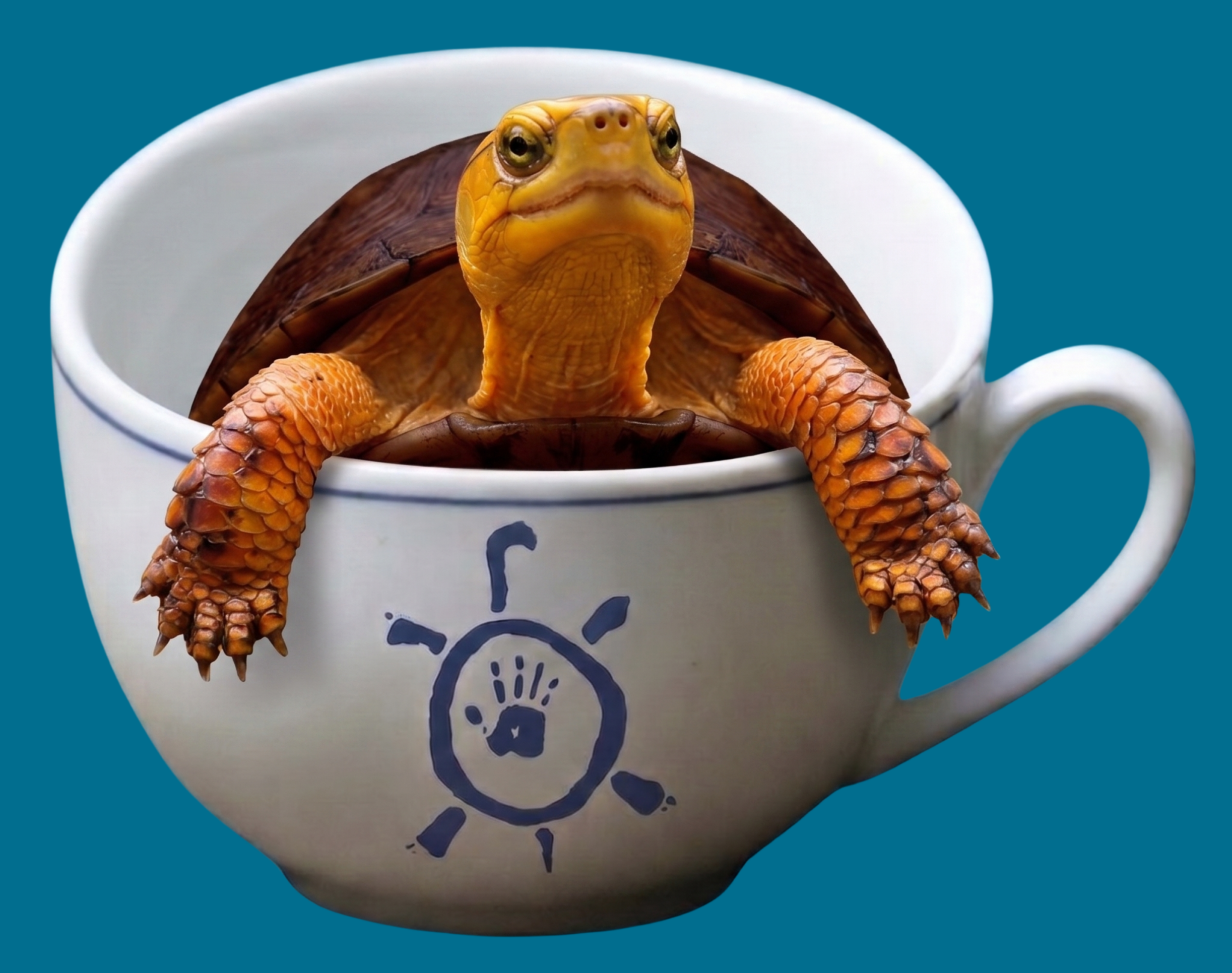


In this follow-up episode of Turtle Tea with TTPG, Wendy Montroy and Anthony Pierlioni move from basic care into the specialized world of breeding McCord’s Box Turtles. This conversation goes beyond simple husbandry to explore the evolving mindset of the modern keeper and the critical role the private sector plays in keeping this species from vanishing forever.
Anthony reflects on his personal journey as a breeder, discussing how his focus has shifted from merely hatching eggs to the more important goal of sharing information and using these animals to advocate for turtle conservation globally.
Key topics covered in this episode include:
-
The Breeding Mission: The necessity of establishing a community of breeders who can ensure the species survives for generations to come.
-
Technique and Timing: Understanding the balance between size and age for maturity, the role of natural cooling, and how to identify seasonal triggers for egg production.
-
Incubation Insights: Managing eggs, the specific challenges of sex determination, and using lower temperatures to produce more robust hatchlings.
-
Hatchling Success: Practical advice on setting up neonates in high-humidity environments and the best methods for introducing them to a staple diet.
-
The Path Forward: A look at the importance of maintaining genetic diversity through ACTS and why transparency among keepers is the most effective way to save animals.
Whether you are an experienced keeper or a newcomer to the community, this episode provides a blueprint for managing a species that no longer exists in the wild and explains why their survival depends entirely on the dedication of human caretakers.
Connect with Our Guest:
Anthony Pierlioni Find him on YouTube at JustTurtles, follow him on Instagram @JustTurtles, or reach out via email at anthony.pierlioni@theturtleroom.org.
Not a TTPG member yet? Join us! The Turtle and Tortoise Preservation Group is full of the kindest, most knowledgeable and FUN turtle people on the planet!
For more information on turtle conservation and husbandry, visit Turtletea.org or join the Turtle and Tortoise Preservation Group (TTPG) community.
Auto Generated Transcript *
* may contain mistakes
Chapters
| 0:10 | Introduction to Turtle Tea |
| 0:39 | The Need for Captive Breeding |
| 2:30 | Education Over Hatching |
| 4:11 | The Role of Private Keepers |
| 6:36 | Genetic Testing and Locality |
| 7:26 | Breeding Readiness Criteria |
| 10:14 | Breeding and Egg Laying Seasons |
| 13:10 | Clutch Sizes and Egg Laying |
| 15:14 | Incubation Techniques |
| 19:46 | Temperature and Sex Determination |
| 21:08 | Hatchling Care Setup |
| 26:02 | Transitioning Juveniles to Adult Habitats |
| 29:52 | The Future of Breeding McCord’s Turtles |
| 31:36 | The Colonial Propagation Program |
| 36:09 | Evolving Perspectives on Turtle Care |
| 41:01 | Closing Thoughts and Community Engagement |
Transcript
Anthony:
If we can produce five future breeders who can take our place with the species that we love, then we’ve been successful.
Introduction to Turtle Tea
Wendy:
Hey, everybody. I’m Wendy Montroy, and this is Turtle Tea with TTPG. My guest today is Anthony Pierlioni. Thank you so much for joining me. And we are going to talk about breeding McCord’s box turtles. We’re going to go over everything you need to know from egg laying to hatchling care. Hey, thanks for joining me.
Anthony:
Hi i’m happy to be here thanks for having me i’m wearing the same shirt on a different day that’s.
Wendy:
Embarrassing i know i know i’m just kidding we recorded these.
Anthony:
At the same time.
The Need for Captive Breeding
Wendy:
All right so this is a question i ask everybody but even though a lot of times i already know the answer to it does the species need to be kept by more people and bred in captivity.
Anthony:
A short answer to that would be yes. It’s complicated, of course. You know, there isn’t a place for McCord’s box turtles to go back to. And they are, yeah, so I think like they’re a great ambassador animal, though, for people that we’re trying to educate about the situation that all turtles are facing, right? So this is a turtle that was common in the 1970s, 1980s, even to some degree, and extinct in the wild by 2010, has not been found in the wild since 2010.
Anthony:
So they’re a great kind of poster child species for the impact that humans have on wild turtle species. And we have species in the U.S. right now that are vanishing. I’ve actually used McCord’s box turtles in talks that I’ve done. I did a talk last year at the Turtle Summit in Massachusetts, where I talked about how the global turtle trade is now hitting home for many of us here, especially those of us on the East Coast. Our box turtles are being taken at such an alarming rate that people that are confiscating those boxes at JFK are letting the boxes go through to Asia because there’s no one to give them to anymore. And I know that’s going to make people angry, keepers angry. Well, we’re here. Yeah, but we don’t have partnerships anymore. because when we’ve had partnerships, a lot of times we’ve burned bridges. I say we, that’s not me and that’s not you, but this is where we’re going, the trajectory where we’re kind of splitting away from that side. So we need to do everything we can to show that we’re worthy.
Education Over Hatching
Anthony:
And part of that is education. It’s not through hatching eggs. It’s through spreading messages and connecting with people and collaborating with people. So I would recommend to, you know, keep less animals. This is something I’m realizing over time more. I’ve always known this to be true, but then I got really hung up on trying to hatch different species. And I still think that in my mind.
Anthony:
It’s more important to try to influence, try to connect with people, try to network than it is to hatch the next egg because a lot of these aren’t going back to the wild. And corn mccord is a great example of that. But the short answer is yes. They should be kept by more people. They should be bred because this species only exists because of breeding and human care.
Wendy:
Yeah.
Anthony:
You almost said it.
Wendy:
I almost did. I caught myself.
Anthony:
It’s okay. I almost said it too.
Wendy:
It’s going to take some time. I’m going to have to work on that.
Anthony:
Telling you, yeah. So I’m using the term human care instead of captivity. I know I’m going to get it wrong a thousand times when I’m trying really hard because I think it’s better. We don’t provide a captive environment. You know, like captive audience, that means you’re stuck there. Captivity is, you know, that’s prison. So yeah, this is not prison. We’re trying to give no total prison. Yeah, we’re trying to give these animals a tremendous existence. So yeah, short answer is yes. Keep them, breed them. But more importantly, spread the message about them and use them in your turtle talks and things like that to illustrate the importance of protecting even turtles here at home.
Wendy:
What a great example if you’re talking to a school to be able to hold up an animal and say, these are extinct. This is an extinct animal. They don’t exist in the wild. If people weren’t keeping them in human care, they would not exist.
Anthony:
Exactly.
The Role of Private Keepers
Wendy:
Yep.
Anthony:
And just between us here, because this is a TTPG talk here, you know, the private sector has done most of that breeding of this species. So there are zoos that have done really well. I was just at the Philadelphia Zoo who’s bred a whole bunch of them. Obviously, the Munster Zoo in Germany and others have had a lot of success, but it pales in comparison to private keepers like Bill McCord, who’s hatched more of these than anybody.
Wendy:
And that seems to happen with several species. I know with the Egyptians, when they were looking at listing them all of the, you know, I think the zoos produced two or three, and the private sector had hundreds.
Anthony:
In a three-year span before the listing, I was a part of a very small group that tried to compile all that data so that we could kind of let the people know. And I was against the listing, but not crazy against it. Some people would argue, this is going to make it so people don’t work with them anymore. This is going to make it so that they’re landlocked and they can’t move from state to state. No. You know it’s they now they’re just gifted to the best possible homes it’s like that’s to me that that’s not a negative so anyway but yes you’re right the private keeper a lot of times does produce a lot what we need to do is come more close to center and you know get some genetic testing done on some of these animals i was actually just.
Wendy:
Going to mention acts because Because I don’t know if you want to talk about that a tiny bit. Like your talk on that last year, like really resonated with me. And I would love to see us doing that with lots of different species, not just the rare ones.
Anthony:
And you could argue that the rare ones are maybe, you know, a bit of a lost cause. And we should focus on things that aren’t rare so that we have that great foundation in case things happen. Right. Right? If we knew where all the box turtles are from that are being bred, that would be really helpful when, you know, We realized 20 years from now that all of that illegal poaching activity that’s led to the populations being decimated, we could save populations that were once strong and are now gone.
Genetic Testing and Locality
Wendy:
Right. If we knew their locality and then you could keep the stock that you’re breeding in human care pure, because I know that’s a big worry too. Like, well, if, if this guy’s from New York state and you’ve got this guy from North Carolina, like genetically they could be different.
Anthony:
So, yeah, there are a lot of people that, you know, Hey, technically science says that these things are the same, are, are the same. So I’m going to breed them. It’s, you know, I got a male, I’ve got some females, I’m just going to breed them. But you know without knowing their their true locality that obviously complicates things a lot when it comes you know comes to actually things maybe one day pie in the sky being returned to the wild so yeah we got off on a tangent i do yeah
Breeding Readiness Criteria
Anthony:
i’m sorry i’m taking you on i’m sorry that’s my fault i took us so.
Wendy:
Let’s get back into breeding and captive care when they’re mature and ready to breed, is that size-based or age or a little bit of both?
Anthony:
I would say probably a little bit of both. I think it generally is, but I do think it, it, it sways more towards size than, than age. Yeah. Yeah. And I do think, you know, they can grow pretty quickly. I think, I think my males were ready probably around age 4 and then females maybe age 5 okay I think so that’s pretty quick in turtle and I bet you could do it faster too, I wouldn’t recommend that. Obviously, we don’t know what fast growth does to them, but there are some species that have produced younger than that. I know there’s a breeder that’s bred common snapping turtles and they get them to adult size in less than two years and then they’re breeding. It’s insane. And then I know I’ve had Spanglerae produce eggs before their fourth birthday. I know there’s people that have had three-year-old leopard tortoises lay eggs. So I think with a lot of these species, you can push it. And I think that McCord’s box turtles are probably one that you can get them to go a little earlier than I mentioned.
Wendy:
Maybe not best for them.
Anthony:
Five to six years. Yeah, I would not recommend it. I wouldn’t. I couldn’t tell you. I think there’s definitely feelings that could cause, you know, organ issues down the line and health issues down the line. But I can’t point you to a scientific paper that says that it definitely will. But, you know, we know that trying to provide the most natural existence possible is what we’re aiming for.
Wendy:
Right.
Anthony:
So wouldn’t you want…
Wendy:
Slow, steady growth.
Anthony:
Yeah. And I’m not saying, you know, it should take your Blanding’s turtle that’s in human care. I almost said the C word. This is where it’s going to be tough because I wanted to just say captive Blanding’s turtle. That would be easier.
Wendy:
Right.
Anthony:
It’s not going to take them 20 years to produce and it shouldn’t, but you also shouldn’t be pushing for five or six with a Blanding’s turtle. Not that I think you could, but. I think there’s a happy medium.
Wendy:
When do breeding and egg laying occur for you? I was going to say when in the wild, but we don’t know.
Anthony:
Yeah, isn’t that wild? Yeah, to not know that, right?
Wendy:
Yeah.
Anthony:
The pinnacle, the best way, the best thing that we could do as keepers is try to replicate the wild as best as we can.
Breeding and Egg Laying Seasons
Anthony:
And then you have a species like this and it’s like, okay, great. Good luck with that. So, yeah, but the good news is there are other turtles that are similar and, you know, they, you know, they respond to certain stimuli and, and, and triggers and things like that. So, yeah, yeah. I would say for me, and I do let most of my animals cool naturally, even if they’re not outside, I do let them cool down and hibernate. I see the same behaviors in them that I would expect from any relatively temperate species. So when it cools down, when the leaves are placed in their habitat, I see more breeding.
Anthony:
Obviously see breeding in the spring as well. I see them going off of food for months for me, generally. If there’s a warmer winter, they might wake up and eat kind of the way spider tortoises do. I keep talking about spider tortoises because I’m talking to you, Wendy. But yeah, for the most part, they’re down. So they get that cool down, which helps males with spermatogenesis and it helps females get ready to create those eggs and everything. So those triggers are really important. So for me, they seem to be important for a lot of species. And I don’t think that mccordi are far off of that. I mentioned in our previous conversation that I don’t think they need to cool as much as other species do in order to breed.
Anthony:
But they do seem to do well with it. And I think that even the ones that don’t cool still have some sort of seasonality, whether it’s rain, temperatures, humidity, barometric pressure related to the rain. I don’t know. But like there may be things happening that are still contributing to that seasonality that helps them kind of lay in a certain time. I will say I’ve seen them, lay more sporadically in terms of timing in those cases where they’re not cooled as much or not at all really cooled. Mine are very seasonal in their production. So for most of my turtles, I expect egg laying to start in May and then it ramps up in June and then I get slammed with eggs in July and then it slows way down in August. And by September, I’m getting nothing. Next to nothing.
Anthony:
Again, I’ll bring up the spider tortoises. They start laying in the summer, in the late summer and into the fall and into the winter. The Egyptian tortoises lay in the winter. So that’s one of the reasons I like those two species because they keep peppering you with eggs when everything else has stopped. So then egg incubation and all of that hatching and everything becomes a year-round thing, activity, which is fun for me. But these guys have been pretty seasonal. So I get eggs in, say, June, usually early June, and then I’m getting eggs from them until like August.
Clutch Sizes and Egg Laying
Anthony:
And they lay two clutches generally.
Wendy:
Okay. How many eggs per clutch?
Anthony:
I think I’ve gotten three clutches from a single female, but I’m not totally sure because they stay together. That’s my hunch. They lay one to three eggs for me I have never gotten a four egg clutch and usually the clutches are two eggs but I do get an occasional three egg clutch and I think I’ve gotten one egg, maybe one time. So generally it’s two eggs, sometimes three.
Wendy:
Is it flavos that eat their eggs terribly?
Anthony:
Yes. I’ve had macornaid eat their eggs too.
Wendy:
Okay. So they’ve got the same issue.
Anthony:
Yeah. It’s not as bad because I do keep them together. So I’m smart enough with the flavos to take out the gravid females. And these guys, just like flavos, you can palpate. So you put your fingers in front of the rear legs in the inguinal fosse and you can feel the eggs pretty well. It’s complicated. It gets difficult when you have a box turtle that can close its shell, so you have to keep the back legs out. And then also it gets complicated when you have one egg because sometimes that egg is right in the middle and you might poke it and push it in and then it’s not there anymore. So I like palpating turtles a lot. I think it’s a skill of mine. It’s something that I’m decent at. And I can tell usually when there’s one egg, I say, oh, I think she’s gravid. And I think I felt one egg because I don’t feel it now, but it was there. And that’s what happens when you have one egg. Anyway, sometimes I can even guess pretty consistently with some of these feces, the clutch size as well, like how many eggs we’re going to see based on how they feel. That’s really easy with something like a spanglerine leaf turtle, because when they have two eggs, that’s filling up like their whole body. Like they’re right there on both sides. Like you can’t even get your fingers in because it’s like, nope.
Wendy:
No room.
Anthony:
Yeah, there’s no room anywhere. And that’s why they stop eating for like a month sometimes if they don’t lay their eggs. They just, yeah, there’s not a lot of eating happening for them in the summer and in the spring because they’re just, the females, they’re just gravid all the time and full up with eggs. So…
Incubation Techniques
Anthony:
Yeah, I think I answered your question.
Wendy:
Yeah, how are you incubating them? I know you mentioned you thought they were pretty tolerant.
Anthony:
Yeah, you know, these Asian eggs are so great. They band up really clearly right from the beginning. It’s a hard-shelled egg, which, like most of the Asian turtle eggs, most North American turtle eggs are soft. But then you get the occasional, you know, mud turtle or Pacific pond turtle that has a harder shell, which is cool. Then with the Asian turtles most of them have hard eggs and then you have the occasional like, Japanese pond turtle has an egg that’s a little bit softer but but a lot of these Asian turtles have really hard eggs and and McCord I are definitely cut from that cloth they band up like crazy they get a band on them that is so obvious like you really know and the first time I was getting eggs from them I was just hoping for that band and like oh maybe the band just isn’t as strong with them because when you have these rare turtles like this like you can’t just look up like show me a corn mccord eye egg like right oh like you you can’t look that up really you know you could ask like a bill mccord if you happen to be chatting with him but that doesn’t happen much either funny story i actually missed my i’m actually missed a ride to the airport because i had an opportunity to talk to bill mccord for the first time at ttpg in 2015 i knew i had to meet the ride and I just I just didn’t know I’m.
Wendy:
Going for it.
Anthony:
Yeah I’m just I was walking he was walking to dinner and I was supposed to be walking to the lobby to meet my ride to the airport and I just did not stop talking to him because it was my first chance to talk to Bill McCork so yeah anyway if you get a chance to ask him about the how the eggs banned or you could just ask me and talk about something cooler with Bill.
Wendy:
How long do they incubate usually?
Anthony:
Yeah, they incubate, I think off the top of my head, somewhere in the 70 to 80 day range. But I have them go longer. I tend to incubate them. I have incubated them in incubators. I don’t incubate them really high for a couple of reasons. The hatching success for eggs, generally speaking, for me, has been higher at lower temperatures. That’s a problem when you have a species like a Reeves turtle because they’re all, so many of the young Reeves turtles out there end up being male. What’s good about that is male Reeves turtles make really good pets.
Wendy:
Yeah, because they stay small.
Anthony:
Yes, they stay small and they’re just, they’re beautiful. They turn black, like jet black with no markings, these beautiful onyx eyes. They’re just, they’re so cool. So I don’t get too bent out of shape for that except like I need some females in my group so I wanted to hold some back and I kept hatching males. So then I bumped the temperatures up, and then now they’re not surviving as much. So anyway, with McCordi, the males are so rare. I mentioned in our last conversation that there was a male around 2015 for sale for $45,000. I even considered a few years ago for like four-inch long confirmed males, I was considering spending $10,000 just to get a male. And I even considered buying eggs for $4,000 each so that I could incubate them with the risk that they don’t hatch, but so that I can incubate them low. Now, there’s lots of males being hatched. And when I first started incubating, I said, well, it’s good. I’ll just keep the eggs low, you know, low and slow and just hatch males. And I know I’ve hatched males and Ben Forrest has hatched males. Ben Forrest is a great kind of lesser known, but one of the best breeders of Asian turtles in the United States. So.
Anthony:
I think I’ve been hatching a mix of males and females, but I don’t totally know for sure. Obviously, it takes time to know. They have to grow up so we can see. And temperature obviously impacts incubation period. So if you’re keeping them really low in hopes of hatching males, then you might be looking at more like 100 days as opposed to bumping up the temp and hatching more females. And then maybe you’re more in like the 80-day range or even less is my general sense. But my incubation times are all over the place because of my incubation methods are all over the place. And my temperatures are fluctuating quite a bit. I do think that fluctuating temperatures do create, do produce more robust hatchlings.
Wendy:
Are they temperature sex determined or do we not really know where that cutoff is?
Temperature and Sex Determination
Anthony:
They are, yeah. Yeah. And that’s part of the reason why males are so rare. It was, you know, why a male would ever be $45,000 for anything other than like a 600 pound Galapagos tortoise is just beyond me. But that’s, that’s the reason why, because they were kept warm and, there were nothing but females and there are species like that as well where yeah there’s nothing but males or there’s nothing but females and that’s just because the people that are breeding them just want to keep hatching the eggs and aren’t concerned with trading changing right yeah and and either risking not hatching eggs or or in some cases i think and i’m not saying that’s the case with mccordi but i think in some cases why would i change that to then have a, who are now going to be selling babies and saying, hey, I hatch females. Like thinking of like Maremi’s Japonica, the Japanese pond turtle. There’s nothing but males. Males are easier to hatch. Why would I make, why would I complicate things for myself, make it harder to hatch eggs and produce more breeders that are going to be competition in five, six years?
Wendy:
Yeah, I could see that.
Anthony:
Yeah, which sucks, but I think it’s, you know, I do think that that’s the case.
Wendy:
Yeah, that’s probably pretty common.
Anthony:
Yeah.
Wendy:
So let’s get a little bit into hatchling care, how you’re setting them up out of the incubator, how long they stay in those setups.
Hatchling Care Setup
Anthony:
Yeah, I generally, with a lot of these terrestrial species, I set them up in snake racks. You know, they don’t need UVB when they’re young and I give them just an opportunity to live in a really wet environment. Sometimes that, you know, a very small amount of water doesn’t have to cover their shell, but they can eat right in that and they can feel secure and they can just be 100% humidity all the time. You know, have water at their disposal all the time. And then the goal is always to keep them individually. Now, during hatchling season, when I’m overrun with hatchlings, it’s tough to do that. But my goal is, as I move out hatchlings, is to start to, you know, I’ve had these two animals in one tub together, but I had other animals in these tubs. Once I get these ones out to new homes, now these, you know, Cormacordi that I’m keeping, I could separate into two different tubs and grow up.
Wendy:
Do you do fake plants or?
Anthony:
Yeah, so fake plants help. And that’s what I was just going to say is the goal is to get them to not like nip each other’s tails or anything. But they’re pretty robust little hatchlings. They run around. They’re easy to feed. You know, this isn’t one of those species where like, oh, you got to get them on live black worms first. Like there’s, it’s none of that.
Wendy:
Like the snake necks.
Anthony:
Yeah, exactly. Exactly. You don’t have, there’s none of that. Throw them some pellets and within, you know, a week generally, especially for like bigger hatchlings that come running out of the egg, like they’re ready to go. They’re robust and strong, and they’re just easy once they hatch.
Wendy:
Do you have a specific type of pellet that you like to use with them, or do you just kind of mix it up?
Anthony:
I, my staple is Missouri aquatic and that’s crazy. I, a lot of people I think wouldn’t do that for hatchlings, but my feeling is these turtles have all day to eat and I’m going to throw them a pellet and let them go to work. So, you know, you can see when the pellets been ripped up and it’s like, there’s little crumbs in the water in the corner of the tub or whatever, like, okay, good. This is, this is a good sign as opposed to just the pellets sitting there. And I’ll even count them too. If I’m giving a hatchling two pellets or three pellets, I’ll count and keep track of how many I put in there so I can come back and look and see how things went. I don’t always do that, but that’s the goal. It’s like I can do that.
Wendy:
Probably when they’re really little, especially you want to know how much they’re eating.
Anthony:
And I do have like, you know, Zoo Med hatchling formula. I do, you know, sometimes I’ll moisten the pellets first that I give them so that as soon as they hit the water, if they’re interested, they’re not going to be turned off. By a pellet that’s too hard, not realizing that if they came back five minutes later, it would be mush. And the mixture helps, obviously, as they’re growing. So I do try to mix, but I definitely rely on Missouri Aquatic a lot.
Wendy:
Do they move straight from that setup into an adult setup, or do you have kind of like an intermediate?
Anthony:
Yeah, great question. So I do have some other, and I do keep them mostly terrestrially as adults. So I do have some other spots where I’ll put juveniles sometimes when I’m growing them up. But my goal, I’ve raised and hatched. And purchased a lot of mccordi that ended up being male, which is crazy. I mentioned I was going to buy a young one for $10,000 just to know that I had a male. I was going to buy eggs and I didn’t. I got lucky. I remember the first one that turned male. I made this joke to my friend.
Anthony:
Yoon Ro, the turtle monk who is into Asian turtles as well and has written like 25 books, and one of them about turtles, the Turtle Planet book is really good. If you haven’t read it, please check it out. Anyway, I told him, I never wanted to see a penis so bad in my life as this Coramacordi that I literally was pulling out. I was pulling this juvenile out of his tub every day to look at his tail. I’m sending pictures to people like Chris Hagen and everything. And Chris is like, I don’t know. I don’t think so. And I’m like, I know it. I’m looking at this thing. I know this is a male and I just stare at their tails all the time and again it may not look like a male tail yet but with mccordi when that cloaca passes the outer rim of the carapace you’re looking at the turtle from underneath yeah and you can see that that cloaca is just getting to the to the rim or or even going past it even if that tail doesn’t look male yet that’s going to be a male and I’ve hatched I’ve raised so many males now I don’t know I don’t know if anyone in America has ever raised as many mccordi from hatchlings to male as I have because they’ve been so rare for so long.
Wendy:
Weird.
Anthony:
And now I’ve raised, you know, a dozen males where I’m just looking at this huge tail in my face and, like, I’ve been trying to trade males for females at this point. So I’m like, great.
Transitioning Juveniles to Adult Habitats
Anthony:
I need to try to find females. So sorry, I went off on a tangent, but, like, That’s fine. Like, I’ve kept them kind of aquatic for that reason. But my goal is always to transition them, in the spring. So I won’t take, you know, in the middle of the summer or late summer, realize, oh, this turtle got kind of big in here. I’m going to move it to a terrestrial setup. No, no, no. I will leave a turtle that’s too big for its tub, borderline too big for its tub in its tub until the spring so that i’m not risking shortening that window that it has to transition from one way of living to the next so like right now because it’s just spring it’s the very beginning of april my room isn’t really warmed up yet we’re just getting to that to that cusp like i had a one of the adult mccord i come out and was staring at me today that that’s a first i haven’t seen them do that in four or five six months i don’t know how long it’s been but it’s been a really long time now we’re just getting to the point where these juveniles that i’ve been keeping in water are you know bigger than i would have liked but now they transition and then that gives them the entire season another six months to.
Wendy:
Get used to yeah.
Anthony:
Piled in before the cold weather hits for the first time rather.
Wendy:
Than being like hey here’s a month to get used to this and then you’re gonna have to bury yourself and not eat.
Anthony:
For right yeah Yeah, absolutely. And it’s funny, you know, turtles are interesting, like they don’t transition well as adults. Like babies could be a year and a half and or now two years because they hatch in the fall, right? They could be two years old and facing their first winter, whether that means in my basement where it does get cold or outside where it gets really cold and be totally fine, as opposed to an adult turtle that transitions from a different part of the country or something like that. Like that’s way more risky. You would think an adult turtle would be more hardy than a hatchling, but actually the young turtles actually transition way better.
Wendy:
I wonder if they’re just more plastic at that point because they’re going to be encountering new things when they’re young. And then maybe they get set in their ways when they’re older.
Anthony:
Yeah. And even like that two year transition, like if you’re taking them out at one and a half years and now putting them outside for the first time and they’re going to be out there for six months and then it’s going to get crazy cold and they’re going to be under the snow and ice. Now, this isn’t Cora McCord I am talking about, but just for those turtles. That’s kind of crazy. But when you think about these terrestrial turtles and how they live the first couple of years of their life in muck and then come out when they get bigger and they’re not going to be picked up by a little bird, like that’s kind of- It’s a big transition too.
Wendy:
Yeah.
Anthony:
It coincides with that transition. And McCord has a similar transition for me. They’re in a temperature controlled, a hundred percent humidity tub and they’re growing up for a year and a half usually before they transition to terrestrial and then six months later the cold hits and they transition both those transitions at one and a half years and then at two years for the cold are both very very smooth oh.
Wendy:
That’s good to know.
Anthony:
Yeah so.
Wendy:
If someone’s you know excited about this and they want to start breeding them do you recommend that they start with hatchlings.
Anthony:
Yeah i think so for sure i don’t know that like adults are even going to be available available Yeah, I think most of the people that have them are excited to breed something they thought they might never even keep before, let alone breed. But there’s more people breeding them. There’s going to be even more. I think a lot of people that are breeding them are going to have more success. A lot of us are newer to it. I’ve only been hatching them for like three years. This will be, I think, the fourth year. And there’s several people that are like that. And I think there’s also people that have juveniles right now that will be breeding them within a couple years. And then there’s new people that are getting them for the first time. So, again, all of those Hapsleys were going to China, and now they’re staying here.
The Future of Breeding McCord’s Turtles
Wendy:
And now they’re here. Okay.
Anthony:
Yeah. So, people are going to have an opportunity. And, you know, I say to Ralph all the time because, you know, he’s my close buddy, and he does such a good job with the Egyptian tortoises. If we can produce five future breeders who can take our place with the species that we love, then we’ve been successful in our work for that species. Right? So, I think about that with a lot of things. I think about that with Egyptian tortoises with him. That’s, that’s the goal. So what we need to do is replace ourselves four or five fold so that, you know, those species have a future. And also teach people the right way, too. So, right, we’re not trying to mix, you know, create hybrids for fun or to mix things from different localities if we can help it, that sort of thing, and just do the best that we can. But, yeah.
Wendy:
Do you know if the species has ever been offered on our surplus list or through the Colonium Propagation Program?
Anthony:
No, not that I know of. I don’t think that they have.
Wendy:
Maybe in the future.
Anthony:
I think in the future that’s totally a possibility. I really do.
Wendy:
That would be awesome.
Anthony:
Yeah. And like I said, I think there are people out there that are breeding them who are like, I’ll just wait. I don’t feel good selling them for whatever they’re going for now. But I think they’re just going to come down. I’m not saying they’re going to come down crazy from where they are now, because they shouldn’t be the value of Chinese box turtles, but they’re definitely going to be more available for people that have wanted them and people that never even thought that it was a possibility, like me.
Wendy:
Yeah. Just want to mention for those who don’t know, the CPP is Colonial Propagation Program. It’s a benefit to all members of the TTPG, and it furthers the group’s mission
The Colonial Propagation Program
Wendy:
of establishing assurance colonies of all species. And members can donate or receive animals through the program. So I always like to mention that because, you know, acronym soup sometimes.
Anthony:
Totally.
Wendy:
It’s not clear.
Anthony:
And if this is your first time hearing about that, how awesome is that? And if it’s just a reminder, also awesome and worth saying. Yeah, it’s a great program run by a great person as part of a great organization. And it’s been a huge part of the TTPG’s growth, which is so wonderful to see, you know, all the hard work that goes into everything that the TTPG does. You know, most in-person gatherings are going down.
Wendy:
Yeah.
Anthony:
The TTPG annual conference is not one of them.
Wendy:
It’s growing.
Anthony:
And the CPP and the TTPG discussion group on Facebook and then now, you know, the live streams and the podcast, like, it’s all working to continue to build this community up bigger than it’s ever been. So now we need to also make sure we’re putting in the work to you know call things straight and and you know bring bring the different sides of the aisle together and all that sort of thing and do things the right way and that’s why i i preface this this now second talk about you know it’s not always about hatching the turtles it’s really about, bringing different stakeholders into the conversation, sharing the information that we’re finding from these animals in human care and building a better knowledge because that’s been proven to really save animals in the wild, right? You think of like the Burmese star tortoise that’s been saved in Myanmar because of information that came from, from private keepers exactly yeah and private keepers too not just yeah so just yeah keep that in mind we’re making a difference one way or another but let’s be real about it too when we do it because we want to make the biggest the biggest impact that we can yeah.
Wendy:
And do it the right way like.
Anthony:
Yeah you.
Wendy:
Want to be sharing good information on care and all that.
Anthony:
Yeah let’s start by just sharing information first yeah realizing that it’s not about hatching the eggs but it’s about sharing the information i understand those that want to keep it quiet and why but we pick turtles dude and turtles need us and and we have to really think about what do they actually need not just you know like if if if you were a hammer then then everything looks like a nail right but like you have to try to challenge yourself to to approach things in a way that isn’t always, like your natural way of doing things and we were all kind of brought up as keepers to like we got to hatch this oh i hatch 10 species this year i gotta hatch 12 next year and then it just compounds and snowballs yeah i’m i am so guilty of that but like no let’s do the hard thing let’s let’s share the information let’s keep less and and let’s talk to people sometimes that just make our blood boil, yeah and just be.
Wendy:
Be open because i i don’t know about you but every time i talk to someone who is a turtle or tortoise keeper i learn something.
Anthony:
Yeah and.
Wendy:
And a lot of times it affects the way that i keep my own animals.
Anthony:
I’ll come home.
Wendy:
And be like from the conference and have all of this stuff that i learned.
Anthony:
Totally and.
Wendy:
If you’re closed off and you’re not sharing like you know you’re doing a disservice to the to everyone yeah.
Anthony:
And most importantly to the species that you love yeah the animals that you love yeah they need us we pick turtles man and turtles are the most endangered vertebrate group on the planet so that means we’ve got our work cut out for us and i think that all of us would sign up for that but i also think that we can.
Anthony:
Maybe had the wrong game plan going into it. And I’m guilty of that myself. So I don’t know. I’m just, I’m dedicated to trying to help however I can. And I hope that doesn’t make me seem phony, but I’m not trying to do like a do as I say, not as I do, because I’ve been guilty of a lot of things I talk about. It’s just like over time you come to realizations that like, dang, this thing that I thought was so important, isn’t really helping to the level I hoped it would.
Anthony:
And, and I want people that are like 10, 20 years behind me that are just coming up to realize that, you know, Oh, I want to hatch all these turtles like Anthony did. Well, that’s all I ever wanted to do. And I said this on the stage at,
Evolving Perspectives on Turtle Care
Anthony:
at TSA, you know, there used to be in the TSA magazine, which was like my Bible at one of my Bibles. Cause obviously Russ’s book was my real Bible, but like I would, that thing would come out and I would flip right to the significant breeding section like that was everything for me like oh man look at this you know kurt hatched this and russ hatched that and paul van der skyl hatched this and like oh man this is the coolest thing ever one day i’m gonna be in the magazine in the significant breeding section one day i’m gonna do that and i’m gonna be like these guys because they are saving species well none of those turtles went back to the wild and the significant breeding section doesn’t exist anymore so i worked so hard to be a part of something that doesn’t even really exist anymore the way that it did and i do think that we can make a difference and bring it back but you know these cora mccordi that i’m hatching they’re not going back to the wild there’s no wild to put them back in back into but but i that doesn’t mean that we stop doing what we what we’re doing yeah i mean they deserve to exist and.
Wendy:
If they’re not in human care, they don’t exist.
Anthony:
Right. And we have to evolve because the McCord’s box turtles that we’re hatching, maybe they couldn’t help the existence and the future of McCord’s box turtle in the wild. Maybe they will. It’s still possible because we saved them. We. Royal we. Right. But maybe they can be a really big and impactful part of saving North American box turtles here at home because we use them in educational programming.
Wendy:
They can be an example.
Anthony:
Because we get out there and share the story, right? So that’s kind of where my head’s at a little bit now as we move forward and think about what the future of the private turtle keeper looks like as we try to make a difference in the world.
Wendy:
That sounds great. So is there anything that we missed at all? Is there any advice that you would give to someone who’s looking into keeping them or breeding them?
Anthony:
I don’t think so. I just would just say, if you think they’re cool and you haven’t spent time with them, then you have no idea how cool they are. That’s what I’ll say. I keep some of the most sexy, most charismatic turtle species in terms of what Keeper’s views are of them. And they all can’t hold a candle to McCord’s box turtle. And I mean, I thought I knew, right? I’m the leaf turtle guy I’m the leaf turtle guy, everybody loves them everybody loves the kai on Garden State Tortoise, this little this little turtle with a jagged shell and big owl eyes comes running up between the kill Chris or a worm if those turtles were four feet long they would rule the world and humans would be dead they’re like little killers like birds of prey with a shell, But like I’m, I have probably as many of them as anybody in the United States. And I’m telling you that Cora McCordi are more comical and charismatic and fun to work with. That’s saying something.
Wendy:
See, you’re making me want to get them. And I’m, I’m trying not to get more species, but it’s hard. It’s really hard.
Anthony:
I know. You’re telling me, you’re telling me. Yeah. They’re just, they’re just awesome. so if you want one i’ll send you one for free and you could just play with it and then decide what you want to do with it don’t do that to me there’s a.
Wendy:
Reason mark calls you the turtle pusher.
Anthony:
I am i know i am i really am it’s i can’t help it it’s what i’m an influencer i stand and i don’t mean that in terms of like the the youtube word although officially i think i am officially a micro influencer but i like i’m talking about like the disc like personality assessment like i’m i’m okay i’m a hundred percent like the intj that exactly yeah yeah that’s myers-briggs but yeah with the disc d-i-s-c and i’m okay 100 which is which is influence so i stand up on the soapbox and tell people what i’m passionate about so i love mccord’s box turtles so that’s what i’m gonna do is stand up on the which is great because the turtles.
Wendy:
Need people like that right.
Anthony:
Yeah and that’s you know that’s another one too i’m sorry to go to another rabbit hole but like i was real depressed coming out of college, not without a zoology degree, you know, I decided to major in something else. And I thought, man, this is what I’m passionate about. And now I’m going to spend a life doing something I’m not passionate about. And like turtles have become something really, important in my life, even almost in a professional sense. I work in the veterinary field because of my love for turtles. It’s what got me the interview and the job. So I think, I don’t know, there’s an opportunity there to use what we have and to use the skills that we have to get involved and make a difference. It doesn’t have to be hatching eggs, and it doesn’t have to be working at a zoo or being a biologist out in the field either. We could still make a difference. And that’s why I think it’s so important, like how we message things and get out there and advocate for these animals that don’t have a voice themselves.
Closing Thoughts and Community Engagement
Wendy:
Well, I think that’s a perfect wrap up. Thank you so much for joining me today. For everyone tuning in, we would love it if you’d leave a review or comment. Let us know how we’re doing. If people have questions for you, where’s the best place to reach you?
Anthony:
Check me out on YouTube first, JustTurtles. I’m also on Instagram at JustTurtles as well. Facebook under my name. I’m the only Anthony Pireleone in the world, so you can Google me and check out a bunch of silly turtle photos. But you can contact me through the Turtle Room website. My email is anthony.pireleone at theturtleroom.org. Yeah. And I will try my best to get back to you. I wish I could say I get back to everyone. I do respond to every comment on YouTube because that’s like the flavor of the month right there we’re trying to build up. So if you really want to hear a response, YouTube, but if you want to have a conversation and all that, email might work too.
Wendy:
We’ll include a link to that too. So it’ll be easier to find.
Anthony:
Awesome.
Wendy:
Thank you so much.
Anthony:
I love talking turtles. I wish I had more time these days, but I love talking turtles and I just love being a part of this community and with all the people, wonderful people like you, Wendy, and just, you know, being able to call you all friends and work towards the same goals is just like a thrill of a lifetime.
Wendy:
Turtle people are amazing.
Anthony:
I’m telling you. Come for the turtles, stay for the people.
Wendy:
You’re 100% right with that. Thank you so much.
Anthony:
Thank you. Keep up the great work.