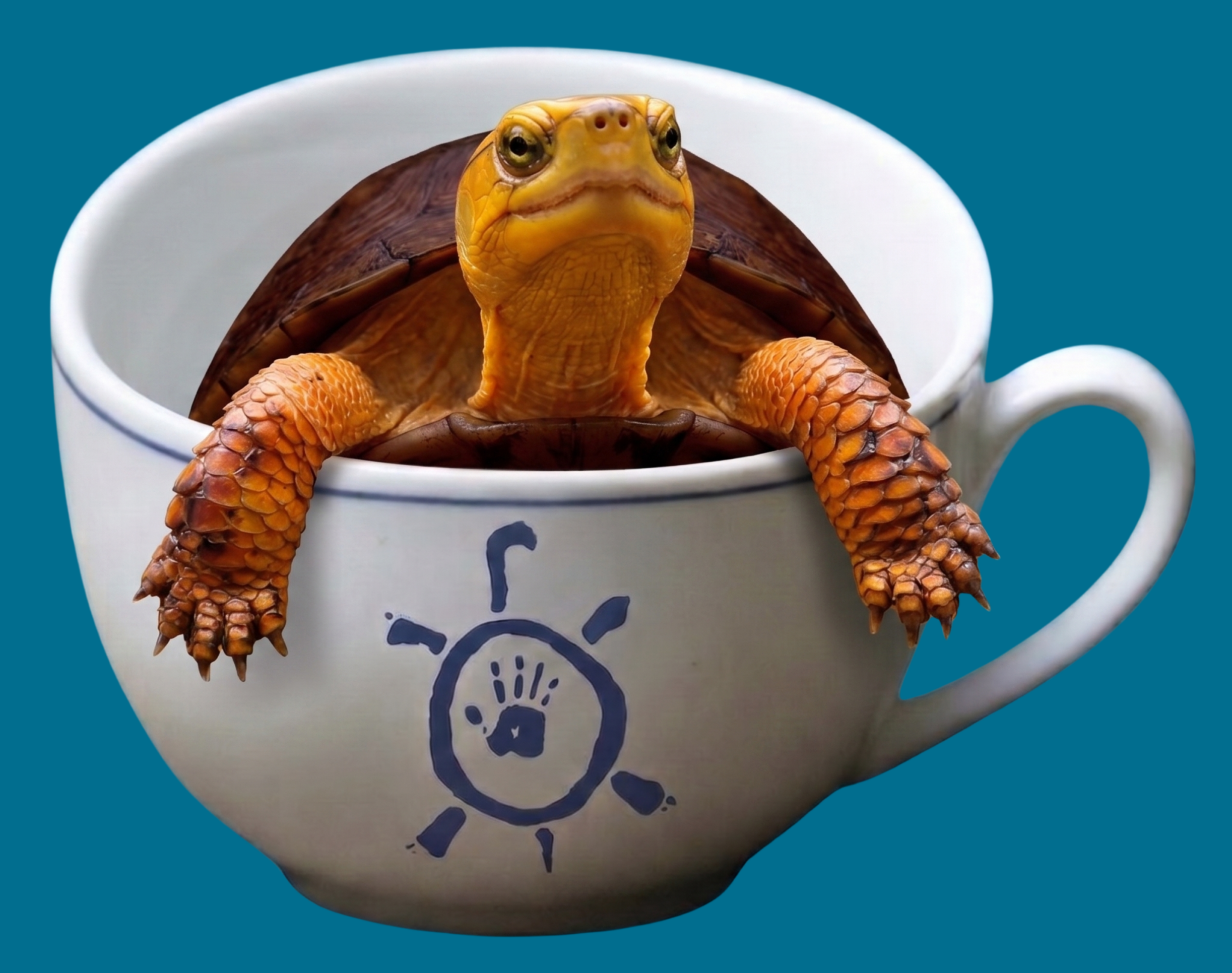


Unlock the secrets of breeding Bog Turtles as we break down everything from egg laying to hatchling care. In this episode, Wendy chats with Raul Gonzalez about the challenges and rewards of working with one of North America’s rarest and most coveted turtle species.
Raul pulls back the curtain on his breeding program, sharing everything from the subtle signs of nesting to the critical ”penny-sized” hatchling care that follows. Discover the surprising maturation rates of captive females, the visual cues for sexing these animals, and why patience is the ultimate tool in a breeder’s kit.
In this episode, we cover:
- Maturity & Sexing: How captivity accelerates maturity compared to the wild and the visual differences between males and females.
- Breeding Triggers: The simple approach to introducing pairs after brumation.
- Nesting & Incubation: Recognizing the ”pacing” signs of a gravid female and the specific incubation methods Raul uses to avoid mold transfer.
- Hatchling Care: The ”shoebox” setup strategy for tiny hatchlings and getting them started on food.
- The Breeder’s Mindset: Why passion, not profit, must drive the preservation of this species.
Connect with Raul: Find Raul Gonzalez in the TTPG Facebook Group or message him directly on Instagram and Facebook for questions about breeding and raising bog turtles.
Not a TTPG member yet? Join us! The Turtle and Tortoise Preservation Group is full of the kindest, most knowledgable and FUN turtle people on the planet!
Auto Generated Transcript *
* may contain mistakes
Chapters
| 0:28 | Breeding Bog Turtles |
| 1:16 | Wild Population Concerns |
| 2:57 | Captive Breeding Experiences |
| 5:59 | Preparing for Breeding |
| 10:35 | Egg Laying and Nesting |
| 12:19 | Incubation Techniques |
| 16:00 | Hatchling Care |
| 19:04 | Starting a Breeding Program |
| 22:39 | Final Thoughts and Advice |
Transcript
Breeding Bog Turtles
Wendy:
Today, I’m joined by Raul Gonzalez, and we’re going to be talking about breeding bog turtles. We’ll go over everything you need to know from egg laying to hatchling care. Thanks again for joining me.
Raul:
Thank you for having me, Wendy. Appreciate you.
Wendy:
So in our last episode, we covered care and husbandry. I think I know the answer to this question, but it’s something I ask everyone. Do you think this species needs to be bred more in captivity?
Raul:
It would be nice if we could produce them in numbers or produce more because there’s very little of them. It wouldn’t. Go ahead.
Wendy:
I feel like this is a species that’s kind of on the bubble in the wild and could potentially someday need that captive population because the wild populations are so fragmented.
Wild Population Concerns
Raul:
What needs to be done and of course i don’t know the first step to doing this but my guess is of course get everybody on board which is probably the hardest part everybody that has them to get on the same page and have the same kind of idea and mindset and then second is testing and and i guess you know there’s no point in breeding all these turtles if they’re not going to be functional to some kind of putting them back in the wild type of scenario right if they’re just If they’re considered mutts, they’ll never make it past the hobby. They’ll just stay within turtle keepers. But yeah, we were able to test the animals and determine if they’re 100% from a certain locale or where they’re from and kind of get them back out there. I definitely do believe they’d be helpful in repopulating areas that don’t have them.
Wendy:
So I know that in the wild, there’s a distinct southern and northern population. Do you know if there’s any differences? Are there size or looks, or are they pretty much identical?
Raul:
If I recall correctly, the northern populations have the red and orange patches. So if you see the turtles, there’s old photos, and of course, there’s all types of photos online. But there’s some animals that have real red or real dark orange ear patches. And then if I correct, the southern population has yellow or a cream orange color. So I want to say that’s kind of the distinction about size. I’m not too sure how much of a difference there are in size. I think they’re all uniformly the same size, basically.
Wendy:
But yeah, if there’s visual differences between the population, chances are there’s definitely some genetic changes going on there.
Raul:
For sure. Yeah.
Captive Breeding Experiences
Wendy:
So I know in the wild I was reading, it can take like eight to 10 years for them to be mature. What’s your experience with them in captivity?
Raul:
So there’s a female that we got as a juvenile, not as a hatchling, but I think when I got her, it was two years old. And she’s four years now, officially. And at four years, she’s laid her first clutch.
Wendy:
Oh, wow. That’s an acceleration.
Raul:
Yeah, I mean, I feed them pretty well or every other day or every three days. But yeah, she’s of size. She’s produced. Of course, we didn’t get fertile or no, we didn’t get fertile eggs, but she laid eggs. So hopefully within time, they’ll be, you know, fertile, maybe a larger clutch. She laid only two eggs. But I think four to five years is the minimum. And then, you know, everything else is just different variables, right? If it takes longer, obviously there’s food intake or whatever going on that takes some longer to mature.
Wendy:
And I know you mentioned last time they’re not temperature sex dependent. So how long generally do you have to wait before the males reveal themselves?
Raul:
It’s hard. So that animal as a hatchling, it wasn’t itty bitty. It had some size already, but they all looked male. They have long tails, beefy tails even for females. but, You have to have a male and female to compare side by side because even a female, if I showed you only female photos and asked you to guess the sex, you would say it’s male, right? Because they just have thick tails. Yeah, long and thick. Of course, when you see a male, you know for sure it’s a male because they’ve got an even larger, longer tail. But you have to have them side by side. Once you see them side by side, you can kind of guesstimate the sex. They’re not like spotted turtles. So we have some spotted turtles, and the females have really small, dainty, thin tails. And males have thicker tails, but it’s not. So it’s more obvious. Yeah, a female bog turtle has a thicker tail than a male spotted turtle. And then, of course, a male bog turtle has a huge, you know, what’s it called, like a third leg per se. I mean, it’s long.
Wendy:
So how many years usually before you can tell?
Raul:
I would say two and a half to three.
Wendy:
And so if you want a specific sex, you’re waiting that long to see what you get.
Raul:
Yeah there’s people that the few people that do have them and do hatch them uh from my understanding most of these guys have held on to them or sat on them until they can kind of see what they have and then you hear about that one animal that’s available and what it is it’s most often the male right because it’s just a lot of males but but yeah i just it takes a while and hence why nobody you don’t get them you don’t see a pair available ever i mean maybe there is one it’s in a lifetime chance that comes up but it’s not often it.
Wendy:
Would be very rare yeah.
Raul:
Yeah yeah.
Preparing for Breeding
Wendy:
So I know you house your animals separately, and in order to get them to breed, they’re brumating over the winter in your fridge. So once you bring them out of brumation and kind of get them warmed up and feeding again, how long do you wait before you start introducing the male?
Raul:
I probably give them about two to three weeks where I just feed the females heavy, give them anything and everything they want to eat, whatever, a varied diet, right? as much as I can of whatever they want. They throw you earthworms one day, next day, beef heart, and just see them that they’re eating. Of course, most of them, if not all of them, eat with no problem. Once I feel like they’ve had some time to take in good food intake, then I’ll introduce the male and that’s all they need. The male is a visual… He’s a visual breeder. Once he sees the female, he chases after her and mounts her and it’s pretty straightforward. There’s no I don’t need to do nothing special. I don’t need to change the play music. You don’t need to play music for them.
Wendy:
Yeah, none of that. They do their thing.
Raul:
They go at it. The mills can be pretty aggressive and pretty hard on the females. So just depending on what I’m seeing, I’ll either leave the mill there for a few days. And if I see them that they’re separate here and there, then I don’t feel obligated to separate them. But if I see that the mills have been hounding her, and every time I stop by, he’s on her, then I’ll separate him and give him a break and let her kind of take it easy. Maybe give her a few days off and then bring them in again. And I’ll do that for about a month, a month and a half. They don’t, I don’t think they need to be together every day for two months. But I think a few weeks together on and off is enough. And then I just look out for the pacing from the female down the line.
Wendy:
Okay, so that’s the sign that she’s going to nest. Will she be out on the land area kind of pacing around?
Raul:
You know it’s so it’s interesting because you know before i guess as a novice as a beginner you never notice the signs right but as you start working with turtles keeping different species you start to see what they do when they need to lay then of course you note the month of the year and you notice that this time of the year they start doing this and so bog turtles will mostly stay in the water they do come out on land they do kind of hunker down under a stump or undercover but a female will will be out in the open and they lay in the evenings and they either lay before a rainstorm or during a light rainstorm and it’s pretty interesting because it’s just it’s you’ll never see her out and about and then when she’s looking to lay she’s out and about and you’re just like huh so you know that’s never out in the open yeah yep and then uh there’s videos on on my facebook page where you know i’m watching them dig a hole to lay i’m watching them you know drop eggs. It’s been pretty cool that I can tell, give or take, by how they act that something’s up. And they give it away when they’re going to try to lay, or they’re looking to lay.
Wendy:
And how many eggs do they usually lay?
Raul:
On average, it’s two. The most of my animals lay is four. I got one female that lays four eggs every time, almost every time. Like I said, this last year, she only, I think she laid, no, she laid two and she didn’t double clutch, but they lay four. They will double clutch. I do think the young female that’s laying now may double clutch in the future. This first year that she went, she only laid one clutch and two eggs and that was it. But I’ll take anything, right? One egg. If they give me one egg, I don’t mind as long as they get the egg out. And if I’m able to hatch it, I’m excited and I’m, you know, giddy.
Wendy:
And you don’t have trouble. I know some will eat their eggs or smash them. You don’t have that problem with them.
Raul:
With them doing it, no. Obviously, I’ve been a dummy and I’ve, you know, dug in there a little bit kind of aggressively that I cracked an egg.
Wendy:
I’ve done that too.
Raul:
I did have one reason where I don’t know if something cut it or the turtle scratched it open, but there was two eggs out of the four that had slits in them. And the eggs were recently laid. And it’s not like there was a snake or a scarlet snake in the tub, you know, trying to eat the eggs because it’s a waterland tub in a small land area. I got the ground. I dig it all up just to make sure. But it was weird. I don’t know. Maybe she scratched them open when digging the cavity. But unfortunately, I was unable to salvage them with, you know, with new skin.
Wendy:
Yeah. Yeah.
Egg Laying and Nesting
Raul:
There you go. Yeah. Yeah.
Wendy:
So, once you’ve dug the eggs up, how do you incubate them and how long does it take?
Raul:
So, the first time I got some eggs, I put them in the incubator at 82 and they went bad. They didn’t hatch. They went through, they were good, but they just, I guess at the end of the 60 days, they just failed to hatch.
Wendy:
Were they on vermiculite or perlite?
Raul:
They were on vermiculite. Okay. And I feel like maybe the 82 is too hot after I kind of did a little asking around and kind of reading what I do now. Oh, and I kept them all together. So I’m kind of paranoid now in a sense that I separate each egg and I put them on an individual little small deli cup with vermiculite. I do add sphagnum moss around the egg, moisten. And i set up each egg individually because i’ve i have this idea this paranoia that if one egg goes bad and it molds up it’s going to transfer over to the good egg and then ruin the whole clutch one by one right so now to kind of avoid having that happen i set them up individually i basically use those cups that they sell super worms in at pet supermarket petco they’re like these little tiny i don’t know about the size of a cat food little holes, tiny, tiny holes.
Raul:
And I’ll set them up in my bookshelf in room temp, 75 degrees, 74 degrees. And average is about 68 days. I’m always wanting them to hatch at, you know, I’ve read that there’s reports of them hatching at 58 days,
Incubation Techniques
Raul:
60 days, but 68 is about the average. And, you know, they’ll hatch on their own. Sometimes I’ve had some open the egg and And unfortunately, they opened or they hatched out a little too soon. They still had a yoke. And… It’s just something like, you know, they’re so small that if you try to tear them out and get them out of there, you probably do more harm than good.
Wendy:
Yeah.
Raul:
And then if you, you know, if you leave them there, then, you know, they can also just die because, you know, they just weren’t ready for it. And I’ve had that situation. So it’s always nice to come in or come home and see something. Go ahead.
Wendy:
They’re tiny as hutchlings. I mean, are they like five or six grams or something?
Raul:
A smaller, itty-bitty. I mean, they’re not dime-sized, because that would be crazy cool. Maybe penny. I think penny is about a good size. Yeah, I’d like to eventually maybe one day be able to hatch out maybe a three-stripe, the bog, and all the tiny turtles that we keep. And kind of do a comparison so you can see the variability in size and compare them. And of course, there’s always that instance where one of them is just tinier than the rest, right? And it just makes them even look smaller. But yeah, what about penny size? Because the show does broaden up after they’ve been out for a little bit.
Wendy:
So are you setting them up in just a very tiny amount of water when they’re that size and indoors, I assume?
Raul:
Shoebox. And I look for shoeboxes with no ridge on the inside. You know how you…
Wendy:
So no little bump? Yeah.
Raul:
Yeah. Where the other container sits inside if you stack them. Yeah. None of that. What I do now, there’s these square reptile boxes that the Europeans use them for shipping or for, you know, if you go to Europe, that’s kind of their style. It’s a square container with no ridge inside or no dip. And it’s very simple. I think now, and even then I’m still cautious about putting a sphagnum moss, but very basic, just enough to cover their heads. It doesn’t cover the shell completely and I slightly elevate it. So if they want to go in the deep end, they can walk down and be in the deep end. If they want to be in the shallow or out of the water, they walk up upwards and keep them like that. And just very simple. You do have to keep an eye on them or on that setup because the water will evaporate pretty quickly within two or three days. There’s no water, so you definitely have to have, they’ll dry out. You definitely, you know, you want to keep them with some water in there. But yeah, you just got to be on top of them. And you are. I mean, I try to be. It’s a turtle that, you know, not easy to come by, not to come from me hatch, so I’m always on top of them.
Wendy:
And I’m assuming no basking light with them being that ridiculously small?
Raul:
There is basking lights, but it’s, how can I put it to you? You can barely feel the warmth, but there is some warmth. But it’s such a distance that one light kind of takes up two to three containers.
Wendy:
Okay. So you’ve got it really diffuse and you’re not cooking them.
Raul:
Yeah, correct. And most often they don’t use it, but it’s just give them the option, right? I’m sure in the wild, yeah, they go out and look for some sunlight. And, you know, they’re dark as hatchlings. They’re not light colored. They’re black or dark, dark brown. So, I mean, I’m assuming that coloration is to help them warm up on cold bogs or whatever and keep them, you know.
Hatchling Care
Wendy:
All right. How are they as far as starting on food? Do you need to offer them like wiggly live stuff to get them eating or they start eating right away?
Raul:
You can get them to take pellets or not pellets, the sticks or something that, I don’t know, it must be the shape of the reptile mint sticks that looks like a worm, right? So you moisten it enough where it’s soft and it’s still kind of firm, but it’s enough that when they bite it, it takes a little chunk out and they’re pretty easygoing. But the sticks is for convenience or any pelleted food is out of convenience to not be there all day hand feeding them. But if you can get some baby night crawlers or baby earthworms or fine blackworms or fresh tubics worms, they can tell. I mean, they must smell it.
Wendy:
Yeah.
Raul:
In some extent on the animals that don’t move and they just go at it. They’re naturally easy to get going.
Wendy:
Okay. That’s good.
Raul:
Yeah.
Wendy:
And are you keeping the babies singly too? I know you keep your adults. Do you keep them like with clutch mates or are they separate?
Raul:
It’s, it’s always fun to have them together and see two heads or three heads, poke their heads out and look at you and they’re all doing their thing. And at first it was probably what I wanted to do, just see them all raised up together, but it’s just, it’s not easier. It’s just better to do them individually. Cause obviously there’s always going to be one that’s dominant or one that’s bad, you know, eats well and just doesn’t care. And there’s some that are a little bit shyer or maybe they hatch a little bit smaller or later in the, you know, a few days or a week later. So it just better do it individually. I have raised them up with spotted turtles. Again, it’s more for like to see it in my, you know, see a visualization of spotted and bog turtles together, you know, hatchlings is really cool. But at the end of the day, it’s probably best individual. I probably recommend just doing individually. You can track the status, you know, who eats well, how much they ate, all that.
Wendy:
Okay. And how long do you usually keep them in that hatchling setup before you move them to a larger enclosure?
Raul:
I’d probably keep them until they get about half dollar size. Those tubs are probably eight inches by six. And it’s keeping them small. It’s not that I don’t want to give them more space. It’s just you want to keep them within the area so they can find the food. And kind of, you know, stay, you know, you give them a 20 gallon aquarium. Turtle’s never going to find the worms. I mean, and you’re going to dig for the turtle every time to keep a visual on it. But no, I keep them pretty basic and pretty small setups until they get, you know, big enough where I feel that they can go outside.
Wendy:
Yeah, you don’t want to give them a chance to flip over or get stuck.
Raul:
Oh, man. No, no. There’s nightmare scenarios. And, you know, everybody’s done something or seen, had a situation where it’s
Starting a Breeding Program
Raul:
like, man, you wouldn’t believe that something like that would happen or that’s the case. But yeah.
Wendy:
Yeah. All right. So if someone is super into these and they want to start breeding them, is there even a place for them to start? I mean, I’m assuming you’re not you said you’ve never seen a pair. If you manage to find someone who’s going to, you know, sell you hatchlings, I guess you’d probably be lucky to get one or two, right? You’re not going to get a big group of them.
Raul:
Unless somehow, I mean, the bad side to all this is that money talks, right? In the instance, some of these people, it’s more of a financial thing. I mean I’m sure if you have the monies you can get whatever you want and if you can spend whatever money you you feel comfortable with you can get them most of us turtle keepers you know have a budget or have other things and have you know we don’t have an income that we can just throw away, yeah right so it’s one of those things where you know if you got an opportunity, they’re legitimate animals you have the funds to do it and you can pull the trigger I mean And you’re never going to do it or you’re never going to get the opportunity again. I’ve, you know, there’s times where I missed out on something just because I was too, nah, I don’t want to, no, they’ll be there next year. Or this guy’s going to always breed them. Tomorrow I might go. Something might happen to me tomorrow. You know, who knows if my family would continue with them or they’ll, you know, just sell them. But if you have an opportunity, get them, work with them, you know, network. A lot of people are tight-lipped or don’t talk much about them. But, you know, once you get in it, you’ll know who has them, you know, and you’ll work your way. I mean, the people, you know, I don’t want to, what’s the word? Like, they’re not going to just give you the animal or they’re not just going to give you the option or offer them to you just because. They’re going to want to know that you’re serious or they’re going to know that you can come through when it comes to.
Wendy:
A relationship beforehand so that people know that this isn’t just a, oh, I want this cool, rare thing. And then you’re going to flip it. Three months from now or whatever.
Raul:
Yeah, that’s a big, yeah. And I really, I’m sure that stings. When people give you either, they give you an opportunity or the deal of a lifetime and then you end up flipping it, I’m sure puts a sour taste in the mouth.
Wendy:
And I’ve heard of that happening with other species where someone was trying to be nice and give you a discount and then it shows up online in three months for twice the price.
Raul:
Yeah, and then you can’t do anything about it. And then also you just gotta know that they’re not cheap right it’s not i don’t want to put a monetary value because they’re i might say it’s this amount someone’s gonna say no they’re more or less but um you just gotta have it when it comes available like uh you know and i’m i’m guilty of not ever always having the funds at hand and working something out to get what i need or what i want but some of these other people they you gotta have the money you just gotta pull that when they tell you it’s available and they want this much you gotta say okay and pay and be done You can’t be like, no matter what, you know, can you give me three months? And yeah, unfortunately, I’m that guy that tells you I need three months to pay. And luckily, I have a rapport with most people that are okay with doing that with me or working with me. But some of these other guys are, no, you know, you wanted this turtle, you knew about it, you’ve been asking about it, here’s your date, or here’s, you know, I have it now. Do you have the funds? And then that’s where it becomes like, oh, well, and that’s what, you know, kind of also deters a lot of people because it’s, you got to do it, it’s there. and then.
Final Thoughts and Advice
Wendy:
All right. So what’s one piece of advice that you would give to someone who was really looking into keeping and breeding the species?
Raul:
Do it because you like it and love it. Don’t do it because you’re thinking you’re going to get rich. Like I mentioned before, I thought I was going to make so much money. And if I sold them and, you know, the demand and it hasn’t been like that. I mean, there is a demand for them, but now it’s more like a goal, right? Every year I’m trying to do catch, you know, my success rate in hatching the eggs is like less than 50%, right? I’ve hatched two out of four, one out of three. The end goal for me is to have 100% success rate. But if you really get into these animals, that’s the end game. They produce them, get them out there. Let’s try to get the numbers up where they’re not uncommon. Let’s get them out there where you see more people with them. I kind of feel like I’m showboating all the time when I post them. It’s not that I’m trying to rub it in people’s face. I’m just trying to show, hey, they’re out here. There’s there’s you know that’s a turtle species you don’t see often let’s let me show you what i do or what they’re doing and and that’s about it i mean if you get them to do it because you like them you have a passion for them you have an interest in them it’s not about oh well they’re worth this much and you know i’m the only guy to have no it’s it’s not about there’s a difference.
Wendy:
In motivation between gonna make bank and like.
Raul:
This is a.
Wendy:
Holy grail species for me and i love them like you know.
Raul:
The motivation is different and i and i do believe that’s much it’s a level of maturity like you know again 10 years ago my mindset was oh i’m gonna be a big turtle breeder i’m gonna have all these rare species you know they’re you know this turtle comes you know sells for 7 000 i just need a few whatever like that was the the plan as i’ve gotten older as i’ve gone lost animals gained animals with all this i’m just like you know what now i just i work with what i like whether it’s a $1,000 turtle or a $20 turtle it’s what I like, I enjoy watching them. You can ask Natalie anytime. I’ll be outside for two hours just staring at ponds and just watching them swim, giving them more food that they need just to watch them eat. And that’s it. I mean, now it’s just a labor of love. If I’m able to make some money or trade and get another animal that I want without having to spend out of pocket, that’s my ultimate goal.
Wendy:
Well, that’s fantastic. Thank you, Raul, so much for joining me today. I really appreciate you for our listeners. Make sure you subscribe so you don’t miss our next episode. If people have questions about breeding bog turtles or raising hashlings, where can they find you?
Raul:
The TTPG Facebook group, pretty active on there. My Facebook or Instagram as well. And yeah, don’t be scared to message me. And yeah, ask whatever questions you may have and I’ll help you out the best that I can.
Wendy:
All right, great. Thank you so much.
Raul:
Thank you, Wendy.