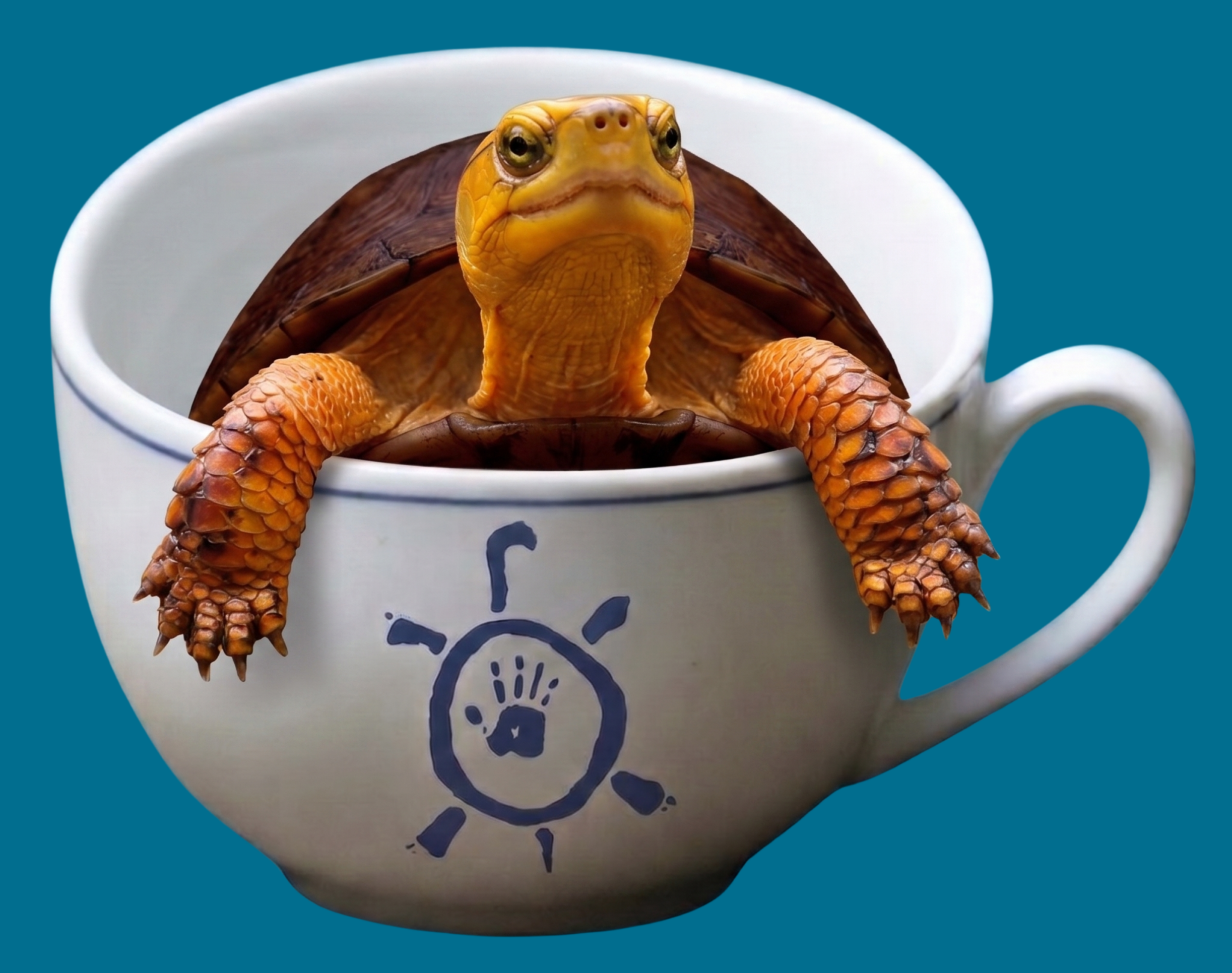


In this episode of Turtle Tea with TTPG, Wendy Montroy and Cameron Lamb discuss the practicalities of breeding and raising Three-toed Box Turtles. Cameron explains his preference for starting with hatchlings to better understand the natural history and care of the species before moving into breeding and producing offspring. The conversation covers the entire lifecycle, from the spring breeding season to the 70-day incubation period and beyond.
The discussion provides a detailed look at how to handle delicate box turtle eggs, which are more sensitive to moisture levels than many tortoise species. Cameron also shares his methods for starting hatchlings on pelleted diets, the benefits of raising young turtles in small groups to encourage feeding, and the safety precautions necessary when moving juveniles to outdoor pens where predators may be a factor.
Key Topics Include:
-
Determining sex through incubation temperatures (82°F–88°F).
-
Setup requirements for new hatchlings, including hydration and UV lighting.
-
Timeline for maturity and average clutch sizes for healthy females.
-
Winter brumation patterns and how they vary between individual animals.
Resources:For more information on turtle conservation and husbandry, visit Turtletea.org or join the Turtle and Tortoise Preservation Group (TTPG) community. You can find Cameron Lamb on Facebook and Instagram at Cameron Lamb Exotics.
Not a TTPG member yet? Join us! The Turtle and Tortoise Preservation Group is full of the kindest, most knowledgable and FUN turtle people on the planet!
Auto Generated Transcript *
* may contain mistakes
Chapters
| 0:06 | Introduction to Box Turtles |
| 0:45 | The Need for Breeding |
| 2:47 | Egg Laying and Clutches |
| 3:19 | Incubation Setup |
| 5:20 | Hatching Process |
| 6:19 | Post-Hatch Care |
| 7:02 | Lighting and Heating |
| 7:39 | Growing Up Together |
| 8:37 | Feeding Preferences |
| 11:44 | Starting to Breed |
| 13:07 | Challenges of Breeding |
| 14:35 | Demand for Baby Turtles |
| 15:35 | Indoor Care Recommendations |
| 16:24 | Breeding Timeline and Patterns |
| 17:10 | Winter Care Practices |
| 18:07 | Closing Remarks and Contact Information |
Transcript
Cameron:
I will say when it comes to box turtle eggs, they seem to be a little bit more delicate.
Introduction to Box Turtles
Cameron:
They’ve got softer shells, in my opinion. A tortoise, if you get a little too wet, it’ll be okay. If you get a little too dry, it tends to be okay. Box turtles, if you get them a little wet or you get them a little dry, they’ll either shrivel up while they’re mulled over. So you kind of have to find that sweet spot.
Wendy:
I’m Wendy Montroy and this is Turtle Tea with TTPG. Thank you, Cameron Lamb, for joining me again. Today we’re going to talk about breeding three-toed box turtles and we’ll go over everything you need to know from egg laying to hatchling care. In our last episode, we covered their care and husbandry.
The Need for Breeding
Wendy:
To start off, do you think this species needs to be bred more in captivity or are they kind of overly abundant? What’s your thoughts on that?
Cameron:
I think they need to be produced heavily. Just about all species of turtles and tortoises, I could say the same. But these guys specifically, they’re under a lot of pressure. I think so.
Wendy:
Okay. Good to know. When are they mature enough to lay eggs? Is it age-based or size-based?
Cameron:
I think it’s a little bit of both i would say size probably is more important typically, three and a half to five maybe even six years is about the time frame it takes for you to get a juvenile to small adult size box turtle after that uh you know they produce pretty regularly after that bigger females will definitely lay more more eggs and more often but i think that That five- to seven-year time frame is pretty important for just the growth of the animal to get to proper size.
Wendy:
Okay. And you house your animals in groups, right? Are you keeping them separate until a certain age, or are they kind of coming up in groups and growing up?
Cameron:
I try to raise them in groups of two or three holdbacks. For example, I’ve got a couple box turtles. Once the weather warms up, I’ll be moving them outside. Just to give them companionship of some sort. They probably don’t need it, but I enjoy raising a couple of them up at a time together. I feel like they learn a lot from each other. They’re a little bit more keen to want to eat food items that you make available to them. They see each other eating and they’re like, hey, that looks pretty good. I think I want some of that. So I prefer to raise them in small individual groups. And then as they get older, I introduced them to my adult breeding colony of,
Egg Laying and Clutches
Cameron:
you know, 10 to 13 animals.
Wendy:
Okay. So how many eggs do you usually get per clutch and do they multi-clutch?
Cameron:
So you typically can get two clutches a year. I’ve heard of some getting three. On the small size, you might only get one or two eggs. On the larger size, you can probably get five, six, maybe even seven eggs. Three to five is about average. I typically don’t see too many more than that or too many less than that. So that’s twice a year.
Incubation Setup
Cameron:
So one female can give you anywhere from six to ten babies a year.
Wendy:
Wow. Can you describe how you set them up for incubation?
Cameron:
Yes, I don’t really do anything different as far as incubation than I do for all of my turtles and tortoises. I damp vermiculite in a small deli container that I throw into the incubator for roughly 70 days. I will say when it comes to box turtle eggs, they seem to be a little bit more delicate. They’ve got softer shells, in my opinion. A tortoise, if you get a little too wet, it’ll be okay if you get a little too dry it tends to be okay box turtles if you get them a little wet or you get them a little dry they’ll either shrivel up or they’re mulled over so kind of have to find that sweet spot sometimes it takes adjusting the container a little bit letting it air out letting it dry out sometimes halfway through the incubation you might need to add a little bit more water if you keep an eye on your eggs they’ll kind of tell you what they’re doing. You know, if you see an egg start to split or grow droplets of water on it, it’s generally not a good sign, especially if it’s early on in incubation.
Wendy:
Are you looking for a target humidity or are you just kind of eyeballing and going from that?
Cameron:
Honestly, I just eyeball it. I don’t get very detailed in the number of humidity or the, amount of humidity. It’s not something I typically measure.
Wendy:
Okay.
Cameron:
Just kind of look at the eyes. Look at the eggs and let them tell you what they’re thinking.
Wendy:
Okay. Are they temperature sex dependent?
Cameron:
Yeah, most of your box turtles are going to be temperature sex determined. On the lower end, you’re going to get males, you know, 82 to 84, probably going to get e-mails. If you incubate more than that, 85 to 88, you’re probably going to get females. Somewhere in between is going to be 85, 86, 84.
Hatching Process
Cameron:
So yeah, pretty standard as far as box turtles as a whole.
Wendy:
Okay. And, you know, right when they hatch, do you leave them in the incubator for a while?
Cameron:
Yeah so i will typically leave them in there sometimes for the the rest of the eggs to start hatching out sometimes if one’s popping out early i’ll i’ll pull him out just so he doesn’t trample on the other eggs and start moving things around but they’re usually pretty good about you know taking their time hatching out and kind of sitting in the corner of the container you just want to make sure you don’t let them come out too early. Sometimes if you give them a spike in humidity or a spike in temperature towards the end of the incubation, sometimes they’ll want to hatch a little premature and you’ll get babies with a large yolk sac attached. And then you have to do a little bit more special care when that takes place. But for the most part, I’ll leave them in the containers for a couple of days after the hatch. Just make sure that yolk fully absorbs.
Post-Hatch Care
Cameron:
They’re walking around, they’re moving around, doing what they’re supposed to be doing.
Wendy:
And what does your setup look like when they come out of the incubator.
Cameron:
So the first thing that I’ll do is I’ll put them in shallow water. I know that the process that hatches is not easy on any animal. And they typically come out thirsty. They want to get hydrated again. So I’ll soak them in a little water, shallow water for, you know, 15, 20 minutes or so. After that, I will typically put them on moist paper towels. I can usually leave them there for about a week, maybe even longer. And then they’ll get moves to their final enclosure.
Wendy:
Okay. Do you have basking light UV for the little guys too?
Lighting and Heating
Cameron:
I give them UV. I don’t give them a basking bulb just because they don’t really use it. They don’t like bright lights, especially as babies. They don’t really like to sit under a basking bulb. At least in my opinion, I’ve never seen them really utilize a basking bulb. And because they’re so small, they dehydrate easy. I’m always worried about just overheating them.
Wendy:
Okay.
Cameron:
So I really try not to put any hot bulbs over the enclosure. My room stays hot enough. The reptile room that I keep them in, it’s in the A’s all the time anyway. So I’m not overly worried about heat.
Growing Up Together
Wendy:
And do you keep them in groups as they’re growing up?
Cameron:
Yeah, I typically like to raise babies, and especially new babies in small groups. I think they do better. They bounce the kind of balance of ideas back off of each other. You know, they learn from each other. They see how they’re moving, seeing how they interact, especially when it comes to food. You see one, see something that they want to eat, and then all of a sudden, all of them want to eat that same free item. So I think it helps for them to kind of learn from each other as they grow.
Wendy:
So are they pretty readily into food when they’re little, or do you have to start them with something special?
Cameron:
I would say for babies, it takes them a little while to really develop an appetite for the food items that I want to feed them. If I were to give them chopped worms or isopods, small crickets, they would eat those all day long, no problem.
Feeding Preferences
Cameron:
They’re very visual in that aspect. They like to see small items moving around, and you typically go for those right away. I’m a little bit more, not lazy, but I like to do things a little bit more streamlined where I can offer pellets, pelleted food items. They’re just easier, especially when you have a lot of animals. So if I can get them on a pelleted diet, that typically is easier for me in the long run. I know reptamine pellets get a pretty bad rep as not being the most nutritional pellet, but I’ve never found a baby turtle to refuse them.
Wendy:
Okay.
Cameron:
So I’ll usually get them started on the Reptimin, and I’ll start adding other brands such as Zumed, Aquamax, Hikari. But once you get them on pellets, they’ll eat anything. They’ll go back to food items like worms and crickets, and then they’ll go right back to the pellets no problem. So that’s typically how I start them off in food.
Wendy:
So do you start them with the pellets rather than live food? I don’t know if offering them live would make them less likely to take pellets.
Cameron:
It just depends. Sometimes I’ll offer the pellets right away and kind of hope that that takes, but not all of them will jump on them right away. Sometimes I’ll put them in shallow water, and I’ll just kind of slowly move the pellets around with some forceps or even using like an aerator just to give the pellets a little bit of a movement. I think it kind of encourages them to want to eat them a little bit more readily.
Wendy:
And you said you moved to adult setups outside around age three when they put some size on them.
Cameron:
Yeah, typically once they get around three years old, two and a half sometimes, but I think size is more important.
Wendy:
Okay.
Cameron:
Typically around three inches, three and a half inches, and I feel pretty confident that I can put them outside. You know, there’s a lot of things that would love to eat small box turtles.
Wendy:
Yeah.
Cameron:
Luckily, where I live, I don’t have a whole lot of predators, but as a precaution, I just want them to be big enough to where they can’t easily be picked up and taken off. And you don’t want to put a small, small turtle in an adult’s enclosure because then it can get bullied or, you know, big male might even eat a small box turtle as a tasty little snack.
Wendy:
Yeah, when they’re little, you have to worry about crows flying away with them because they’re that small.
Cameron:
Yeah, oh yeah. You wouldn’t even know. They’d hop in real quick, take one, and there’s a big box turtle flying in the air.
Wendy:
We’ve had juvenile hawks come and eye our fully grown Greek tortoise male. He couldn’t take him, but he was like, hmm, it’s moving. I thought about it. We were like, get out of here.
Cameron:
I’ve seen photos of bobcats with small turtles in their mouth or coyotes with small turtles in their mouth. Luckily, I have a lot of big dogs that…
Wendy:
Oh, that helps.
Cameron:
They keep away most of the predators.
Starting to Breed
Wendy:
That’s good. So, if someone wants to start breeding this species, where do they start? Pick up a group of hatchlings, like what’s available out there?
Cameron:
And in my opinion, and if you’re not in a rush, I think you should start with hatchlings. I think you should go through that tough phase of a turtle’s life. And I think it’s going to better prepare you for the future. You know, if you can take care of a baby box turtle and raise it to an adult size, then you can hatch them out and then take care of those offspring because you know-how. If you start with adult animals and you decide to wing it with getting some babies that you have no idea how to take care of, I think you’re just doing a disservice to the animal. I think it’s better to start and get through the hard part of its life and really learn the history, the natural history of the animal, and make sure you understand how to take care of it properly from the beginning.
Wendy:
That makes sense, because then you kind of learn all the nuances of the species by the time you have babies and you’re better prepared.
Cameron:
Yeah. I can’t tell you how many people I’ve talked to who have hatched babies year after year and they just can’t keep them alive.
Wendy:
I’m always thinking like.
Challenges of Breeding
Cameron:
Well, if you knew how to do it from the beginning, you wouldn’t have this issue. For example, there’s somebody here locally who probably hatched 25 or 30 babies this year and not a single one survived because they just wasn’t confident on how to raise them.
Wendy:
Yeah.
Cameron:
And it takes a little time and energy and to really learn how to raise them up. But in the beginning, you know how and what to expect.
Wendy:
And you’re looking at probably, you know, it’s not too long. It’s what, like maybe five years before you have babies of your own?
Cameron:
Yeah, and you can confidently be proud of the animal that you raised from a little hatchling. You know its personality. You know what it likes, what it doesn’t like. If it’s doing something weird that may be a sign of illness, you’re probably going to pick it up right away. You know, if you start with adult animals and you just assume that’s how they act, you might lose that animal because you didn’t know.
Wendy:
Yeah.
Cameron:
I always encourage people to start from the beginning.
Wendy:
Yeah, definitely. I mean, we had that come up this week with, we have an adult Redfoot that we got as an adult. And she’s just so much different than the babies that we have. Like, you know, she had a medical issue and we found it pretty quick. But had it been one of the babies that like, I know them inside out and all their personality quirks, I would have known like that. Like, oh, hey, you’re not doing your normal routine. like, let’s see what’s up with you. So I think that’s really, really good advice.
Demand for Baby Turtles
Wendy:
All right. So if you do want to breed, is there a demand for babies of this species? Like, are you going to have a hard time moving them or what’s the status there?
Cameron:
I have never had trouble selling offspring. Everybody loves a small, cute box turtle. The benefit to the box turtles You don’t need a real expensive Fish tank that’s going to get Nasty full of nasty water That you’re overfeeding You know the, Besides the things that we mentioned earlier, as long as you take some time into consideration in their care, they make great pets for those willing to put in the time and effort. So with that being said, I think they’re really easy to find homes for. They just require a little bit more education.
Wendy:
As far as taking care of the little babies?
Cameron:
Exactly.
Wendy:
Okay.
Cameron:
But I think they make a lot better pet than a redhead slider, so they’re usually really easy to find homes for.
Indoor Care Recommendations
Wendy:
If someone is going to keep them inside completely, like maybe their climate doesn’t allow it or only allows them to be outside part of the year, what do you recommend for like an indoor setup?
Cameron:
For like a single box turtle, I would probably suggest a two by four enclosure. You can probably use like a tortoise table style of enclosure. You know, box turtles do appreciate a little bit of room. They’re very active animals. if you don’t give them enough room then they’re going to be constantly pacing back and forth so if you have to keep it inside, maybe it’s just for a couple months out of the year just try to give them as much room as possible plenty of visual barriers somewhere that they feel secure
Breeding Timeline and Patterns
Cameron:
and that they’re not going to be able to escape from okay alright.
Wendy:
Is there anything that we missed as far as breeding and hatchling care?
Cameron:
Um no i maybe maybe the time frame is when it takes place you know usually they’re they’re waking up in the spring and april to july is typically where you’re going to start seeing breeding behaviors and then usually towards the end of the end of the summer may to june july is when you’ll start noticing egg laying so i think that’s important to know just to be able to keep an eye out on when to expect eggs okay.
Wendy:
And your guys are outside year-round. You don’t pull them into a fridge to brumate or anything?
Cameron:
I do not. No, I let them experience our very frigid Arizona winters.
Winter Care Practices
Wendy:
So are they dug down and just out asleep? Or if you have warm days, will they come and poke their heads out?
Cameron:
It really varies on the animal. Some animals will come out on a warm winter day. Others will go down hard. and they’ll dig down and you all see it for months at a time. So it’s not consistent. Some are a little bit more prone to waking up and coming out and others just are down for the count.
Wendy:
Okay. It’s good to know that there’s variation so that you don’t panic.
Cameron:
Exactly. I think nighttime temperatures are the most important. You know, right now it’s getting in the high 40s, low 50s at night. Once those nighttime temperatures, I think, are above 65, 70 degrees, They’re pretty much all going to be out for the year.
Wendy:
Okay, good to know. All right. Thank you, Cameron, so much for joining me today. For our listeners,
Closing Remarks and Contact Information
Wendy:
be sure to subscribe so you don’t miss our next episode. If people have questions about breeding three-toed box turtles, where’s the best place for them to find you?
Cameron:
I’m on pretty much all the social media platforms, Instagram, Facebook. I’m also on the TTPG Facebook forum under Cameron Lamb Exotics, as well as my TTPG email, Cameron at TTPG.org.
Wendy:
Awesome. Thanks again for joining me today.
Cameron:
Thank you for having me.
I’m 77 in Miami with a 3-toed Florida Box Turtle (tortoise) rescued from Hurricane Andrew in 1992 when he was about 2 or 3 years old. He had a mangled back leg that regenerated and his lower jaw broke off but is now about 75% grown back. I took him to a vet but I didn’t know I was supposed to surrender him to the state wildlife department. He’s been well cared for inside in a Lizard Lounge terrarium all this time. I’ve reached out to all local rehabers, in Florida and other areas, but they have strict laws that they can’t have more than 2 of the same species; all were at capacity. They suggested I try some FB groups to look for a place to rehome him that knows how to take care of him, where he might find another tortoise friend. He’s not a child’s pet; he may bite if not handled properly, hungry (and think a finger is a shrimp) or it’s a full moon (horny), etc. He’s in good health and will definitely outlive me!
Hi! Thanks for taking him in, sounds like he’s lucky to have you. You can reach out to Cameron Lamb (cameron@ttpg.org) for placement help, he runs the Chelonian Rescue Program for the TTPG.